You won't forget the headline themes. You'll forget the parts you actually need. And what isn't captured well is usually lost: Forrester found that 60–73% of enterprise data goes unused for analytics — organized notes are how you beat those odds.
After 10–15 customer conversations, you usually have a decent sense of what people want. You can name the top theme or two.
The problem is what happens in the weeks after.
You remember the gist, but you lose:
- where to pick the conversation up later
- which segment said what
- the "other" patterns that were quieter but important
- the details you want when you're writing copy, prioritizing ideas, or following up
It's not that you forget everything. It's that your learning becomes fuzzy. And fuzzy learning leads to fuzzy decisions.
That's why a lightweight interview repository matters.
What a "research repository" means for a startup (not an enterprise)
When people hear "research repository," they picture a big UX research program.
That's not what you need.
For an early-stage team, a research repository is simply a place where:
- interviews are easy to find later
- notes don't live in five tools
- insights are connected to who they came from
- themes stay visible over time
- you can reuse what you learned without starting from scratch
If you can quickly answer "what's true for who?" you're ahead of most teams.
The four things that make interviews reusable
You can keep this really light. The goal is not perfect documentation. The goal is future-you saying, "thank you."
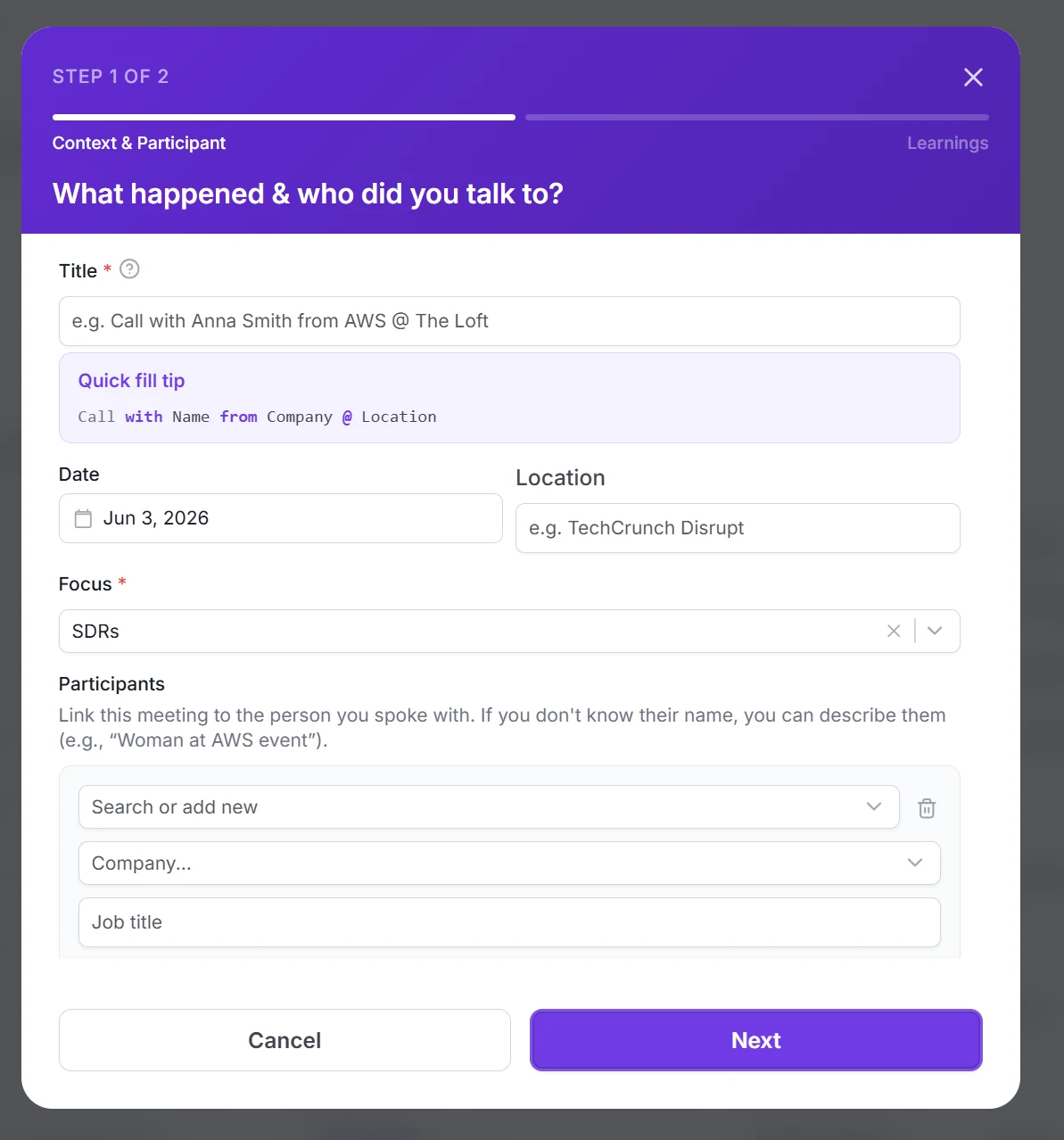
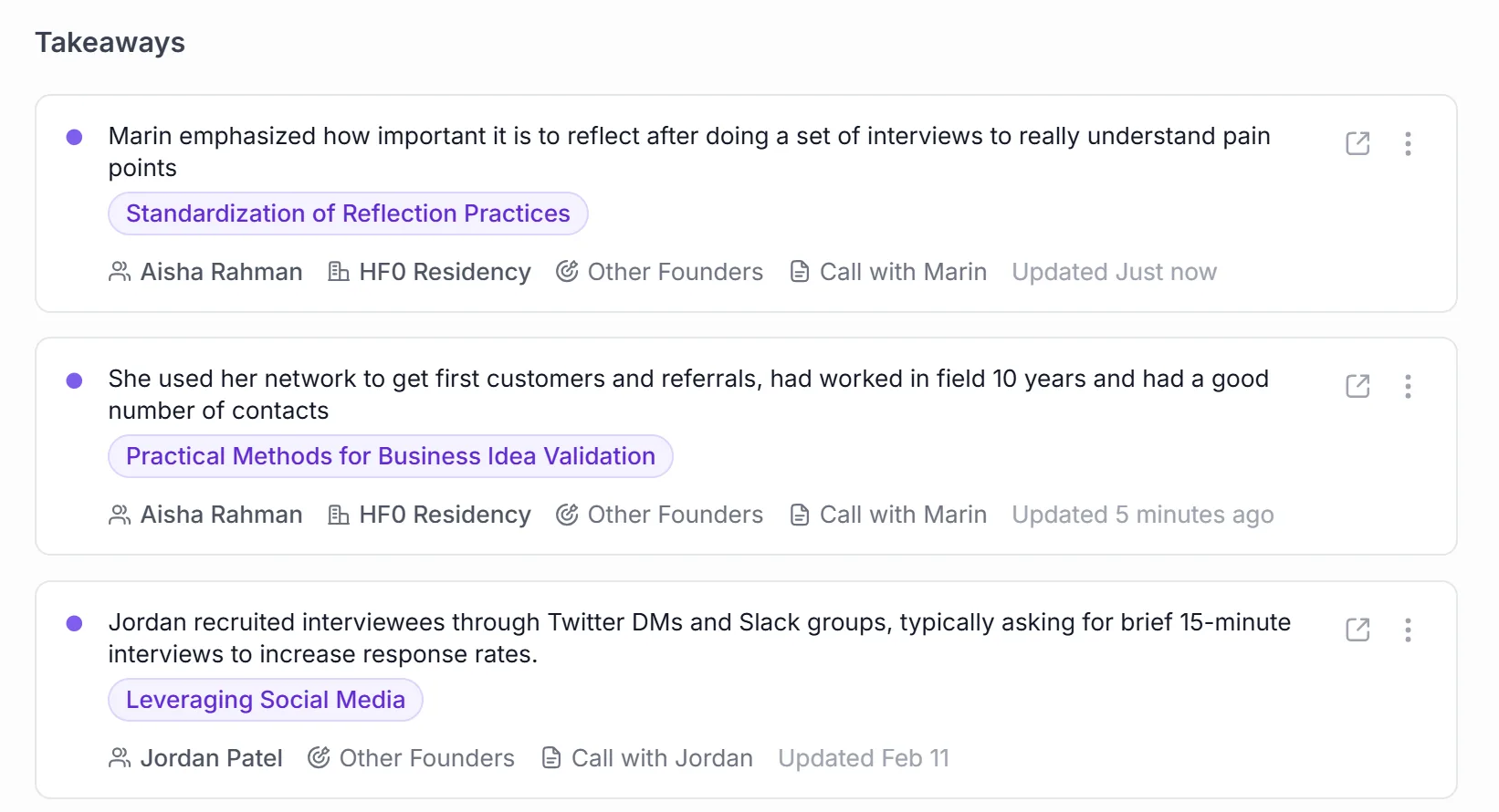
1) A quick summary that brings the interview back to life
A transcript is useful, but the summary is what makes it usable.
A good summary is short and practical: what's their situation, what they do today, where it breaks, and what they wish were different.
2) A little context about who they are
This is what stops you from mixing segments.
You don't need a huge taxonomy. You just need enough to interpret patterns later. Common examples:
- role (user, buyer, manager)
- stage or size (pick one)
- optionally: industry/tool stack if it actually changes behavior
The key is: you can track whatever matters for your market. Context should fit your product, not the other way around.
3) One or two "insights you'd repeat"
This is the user feedback synthesis part most people skip because it feels like extra work.
But it's the part that makes research compound.
An insight is just something you'd be comfortable telling a teammate as a "this seems true" statement.
4) A theme label that helps you find it later
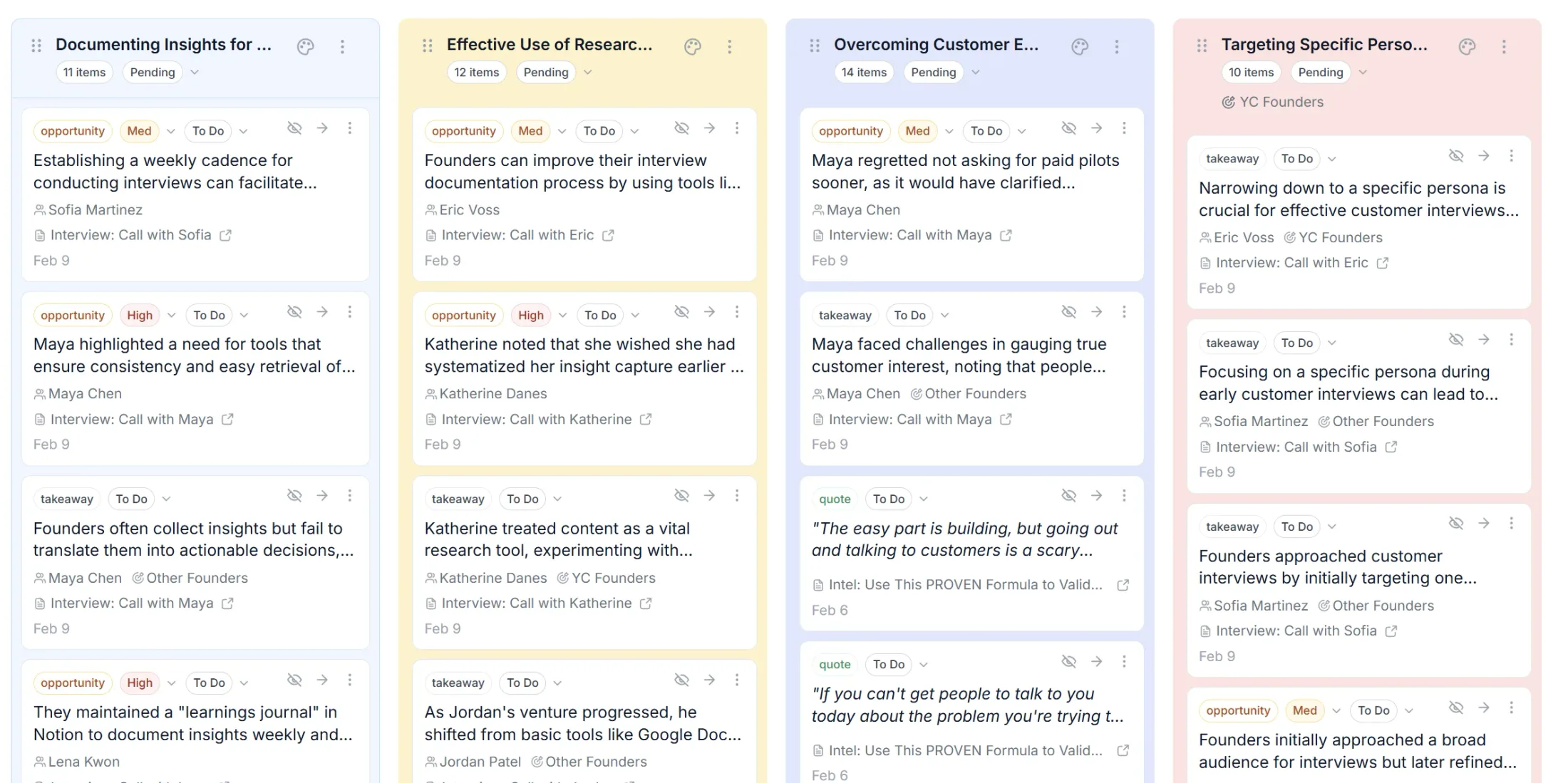
You don't need 20 themes. A handful is enough: onboarding confusion, handoffs break, buyer vs user mismatch, tool overload, hard to justify switching.
Call it theme clustering, thematic analysis, or a research theme board. The point is: patterns stay visible and searchable.
Why spreadsheets and docs feel fine… until they don't
The classic stack is: spreadsheet for who you talked to, docs for notes, a folder of recordings, and a Notion page called "insights."
It's not a bad starting point. It just doesn't hold up when:
- you want to compare what buyers vs users said
- you need to pull quotes for messaging
- you're trying to prioritize ideas based on repeated pain
- you're following up with someone from three weeks ago
At that point, you're doing interview analysis work by hand, across scattered files.
A founder-friendly way to build this without feeling like homework
If you want this to stay lightweight, here's the simplest habit:
After each interview, capture:
- a short summary
- 1–2 insights
- one theme
- the person/company context you care about
That's enough.
If you do that for 10–15 conversations, you have something you can actually reuse for product discovery synthesis, customer interview themes, and follow-ups.
And if you ever want to go deeper later, you can. But you don't have to start there.
Where Intervool fits
Intervool is built around making interviews reusable without adding a bunch of ceremony.
It gives you a place to:
- capture interview notes and transcript-style summaries
- keep context attached to the person/company (attributes)
- group insights into themes so patterns don't fade
- translate learnings into next steps and ideas when you're ready
If you're doing qualitative customer research right now and you want it to compound, Intervool has a 14-day free trial for early teams.