Discovery doesn't end when you "start selling"
Founders often say:
- "I'm doing discovery now."
- "I'll sell later."
But in practice, discovery and selling overlap. Your earliest customers rarely come from cold outreach — they come from people you've already talked to, who already trust you, and who already told you their pain.
The goal isn't to turn every discovery call into a pitch. The goal is to earn the right to follow up when you have something real.
If you do this well, your discovery pipeline becomes your early sales pipeline — without you suddenly acting like a salesperson.
Keep discovery pure (or you'll poison your dataset)
If discovery calls feel like pitches, people stop telling the truth. They start being polite.
So keep the discovery mindset:
- ask about real behavior ("last time this happened…")
- map current solutions and workarounds
- collect language and objections
- understand the buyer/user split
- identify constraints (security, budget cycles, approvals)
You're not selling a product. You're learning where a product could win.
That learning is what makes the later sales conversation credible.
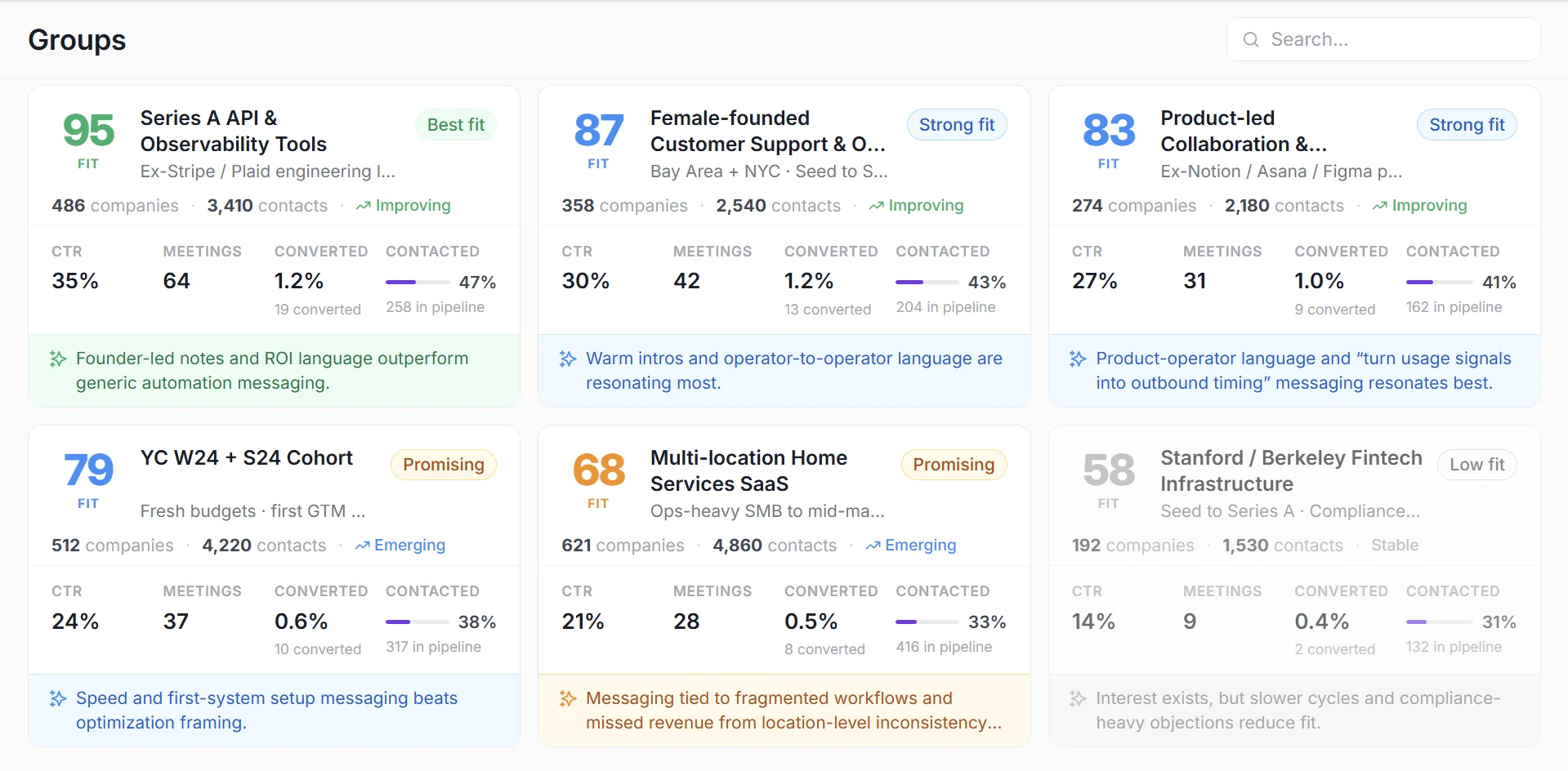
The bridge: "permission to follow up"
At the end of a discovery conversation, add one line that's low pressure and high signal:
"If I build a rough prototype around this, can I follow up and show you?"
You're not asking them to buy. You're asking for permission to continue the conversation.
This single question creates your bridge from discovery → GTM.
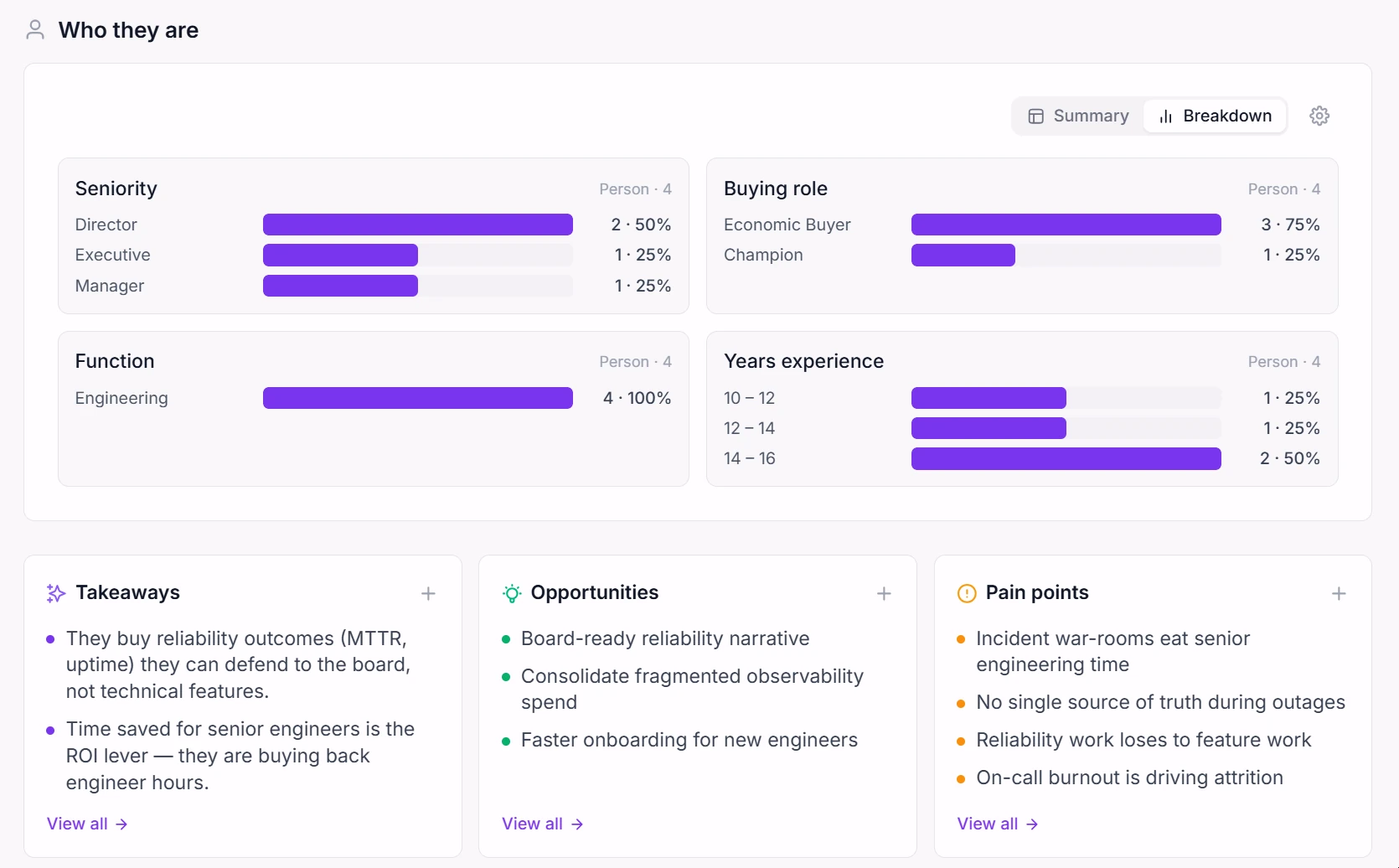
Track intent in three buckets (keep it simple)
You don't need a CRM system to start. You need a lightweight way to separate:
1) High intent
They want to see something. They have urgency. They offered intros.
Signal examples:
- "Yes, show me when it's ready."
- "We'd pilot something like this."
- "I can introduce you to our ops lead / head of X."
2) Medium intent
They like the problem, but timing is unclear.
Signal examples:
- "Interesting — check back later."
- "Not a priority right now, but we'll revisit."
3) Low intent
Not relevant, wrong persona, or no pain.
Signal examples:
- "We don't have this issue."
- "We solved it already."
- "Not my area."
That's your first "pipeline" — just intent states.
Follow-up without being salesy: send proof, not pressure
Most founders mess this up by sending an enthusiastic pitch email.
Instead, follow up with a short message that proves you listened:
A good follow-up looks like:
- 1 line: what you heard
- 1 line: what you built/tested based on it
- 1 question: "does this match your world?"
Example:
"You mentioned handoffs break when teams grow past ~10 people. I mocked up a lightweight way to standardize ownership without adding a heavy tool. Want to take a look and tell me what's wrong with it?"
This keeps the relationship collaborative.
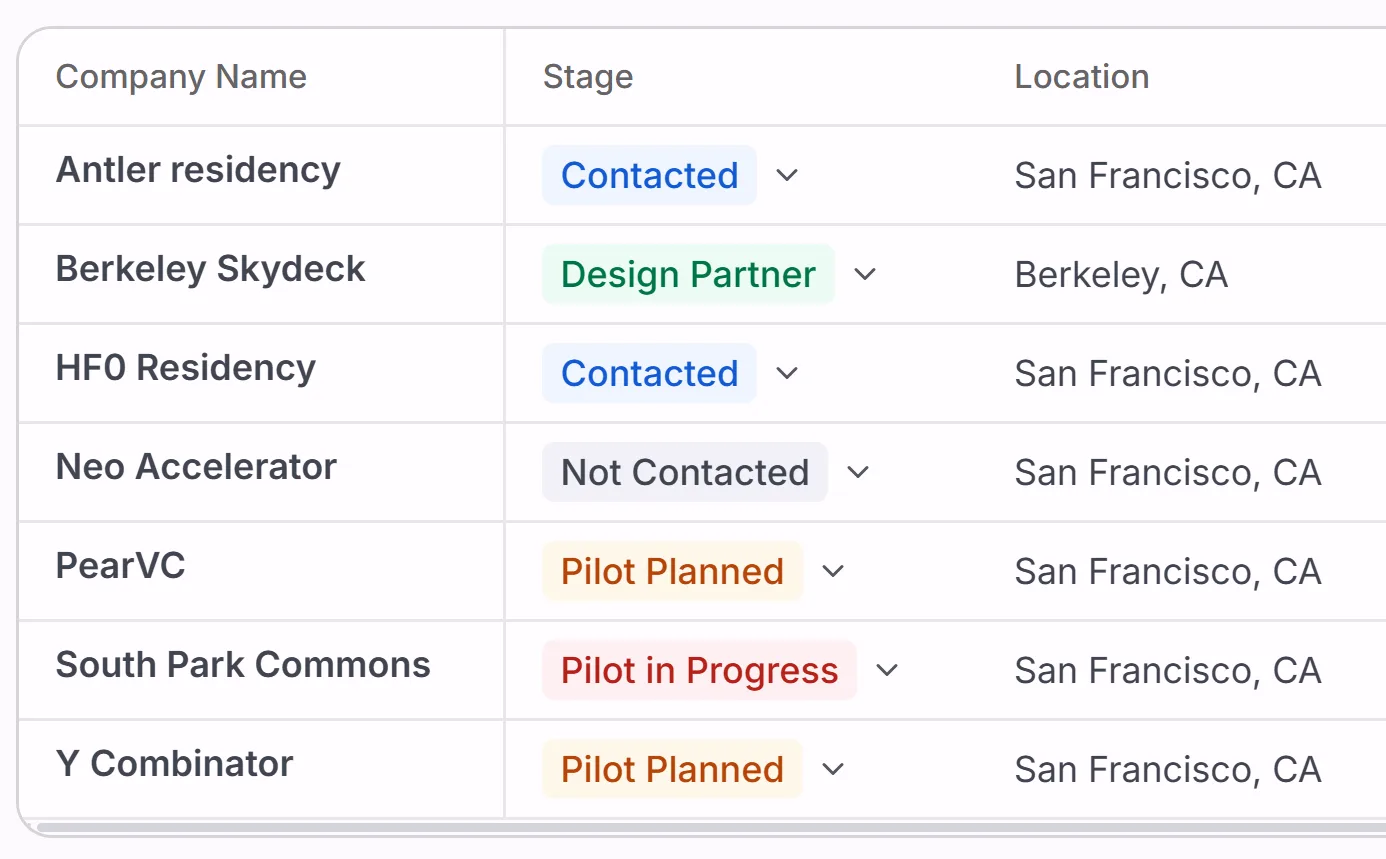
Convert the best leads into a pilot (the early GTM move)
Your first sales step shouldn't be "buy my product." It should be "try this with me."
A pilot offer is simple:
- time-boxed (2–4 weeks)
- narrow scope (one workflow / one team)
- clear success metric (time saved, fewer errors, faster handoffs)
- clear ask (feedback + regular check-ins)
A pilot reduces risk for them and gives you real proof.
The "Founder-Led Sales" conversation is still discovery — just with commitment
Sales at the beginning is basically discovery with a decision attached.
What changes is the question:
- Discovery: "Tell me about the last time…"
- Sales transition: "If we could solve this in a pilot, what would need to be true?"
Ask:
- Who approves this?
- What would make this a "yes"?
- What would kill it?
- What's the timeline?
- What budget bucket would this come from?
You're still learning. You're just learning about decision-making now.
How to know you've earned the right to sell
You're ready to shift from "discovery" to "selling" when:
- you can describe the pain in the customer's language
- the same themes repeat across multiple conversations
- you know which persona is the buyer vs the daily user
- you have a clear wedge (a small problem you solve extremely well)
- you can propose a pilot with a measurable outcome
If you can't do those, keep discovering.
Where Intervool fits
This transition gets messy when everything is scattered — notes in docs, follow-ups in email, insights in your head.
Intervool keeps the thread:
- discovery conversations and takeaways stay connected
- opportunities and themes are visible (so recency doesn't win)
- people/company attributes keep you honest about "for who"
- high-intent conversations naturally become your early pipeline
If you're moving from discovery into GTM, Intervool offers a 14-day free trial.