The quiet failure mode: great calls, no direction
The hard part of discovery isn't the conversation. It's the day after — when the call was genuinely good, the notes are sitting in a doc, and nothing has moved. Do that a few times and you've got a folder full of signal and a roadmap that never heard about any of it.
The gap isn't for lack of interviews. It's the ten feet between a good call and a roadmap change, where momentum quietly leaks out — and a small habit closes it while the call is still fresh.
The debrief (it's not a "process," it's a habit)
Immediately following a conversation, capture two elements without striving for perfection:
First: one or two takeaways
A takeaway represents something repeatable to colleagues, grounded in actual customer experience rather than aspirational thinking.
Consider:
- their current workflows
- pain points encountered
- primary priorities
- sources of frustration
Keep entries concise — limit to one minute of writing.
Second: one opportunity
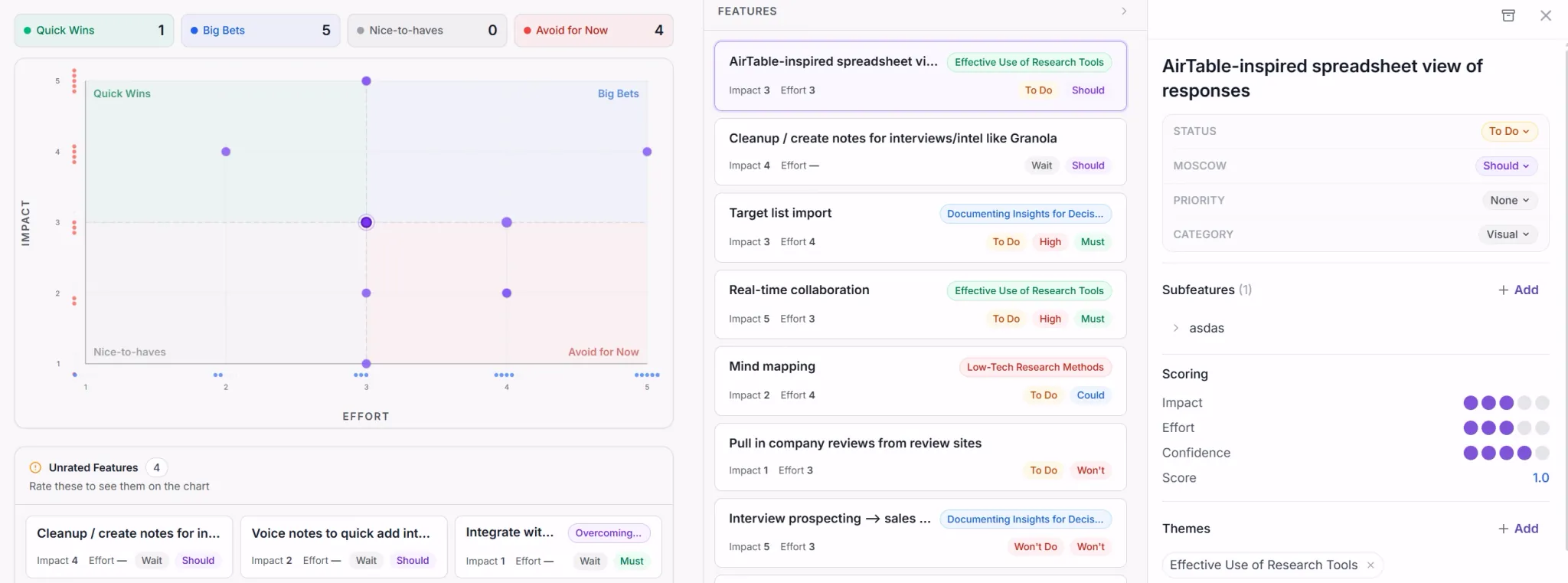
An opportunity translates learning into potential action: "If this observation holds true, what might we test?"
This could be:
- a new feature
- a prototype
- onboarding adjustments
- messaging variations
- validation questions
Success means converting insight into motion, not achieving perfect prediction.
The complete debrief requires two minutes maximum.
The part that changes everything: collect opportunities for a week
Consistent application yields meaningful results. Rather than scattered ideas, you accumulate a concentrated set of opportunities directly connected to genuine interactions.
Abstract debates become obsolete. Prioritization now stems from actual customer input.
A friendly way to prioritize: impact vs effort
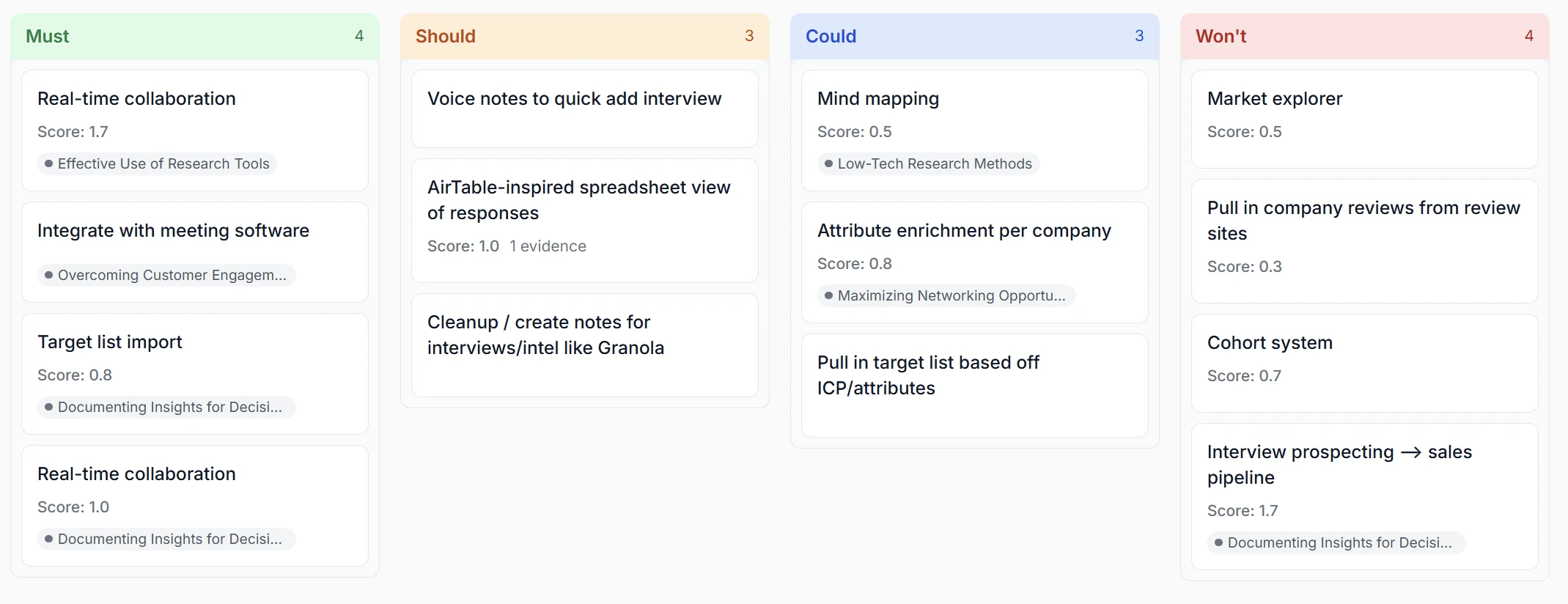
Impact versus effort frameworks work well early-stage because they acknowledge uncertainty rather than pretending predictive accuracy. They enforce necessary tradeoffs.
Evaluate each opportunity through two straightforward questions:
Impact: Would implementing this genuinely benefit the target audience currently?
Effort: Does this require quick experimentation, moderate development, or extensive investigation?
Low-effort opportunities with meaningful learning potential often merit testing despite uncertainty. Conversely, high-effort initiatives without confidence in impact belong in future consideration — neither discarded nor prioritized.
How to avoid shiny-object prioritization
Recent interviews risk disproportionately influencing your roadmap.
A practical safeguard: Before pursuing something, verify: "Have I encountered this concern multiple times?"
Recurrent customer friction typically outweighs singular clever ideas.
What this looks like in real life
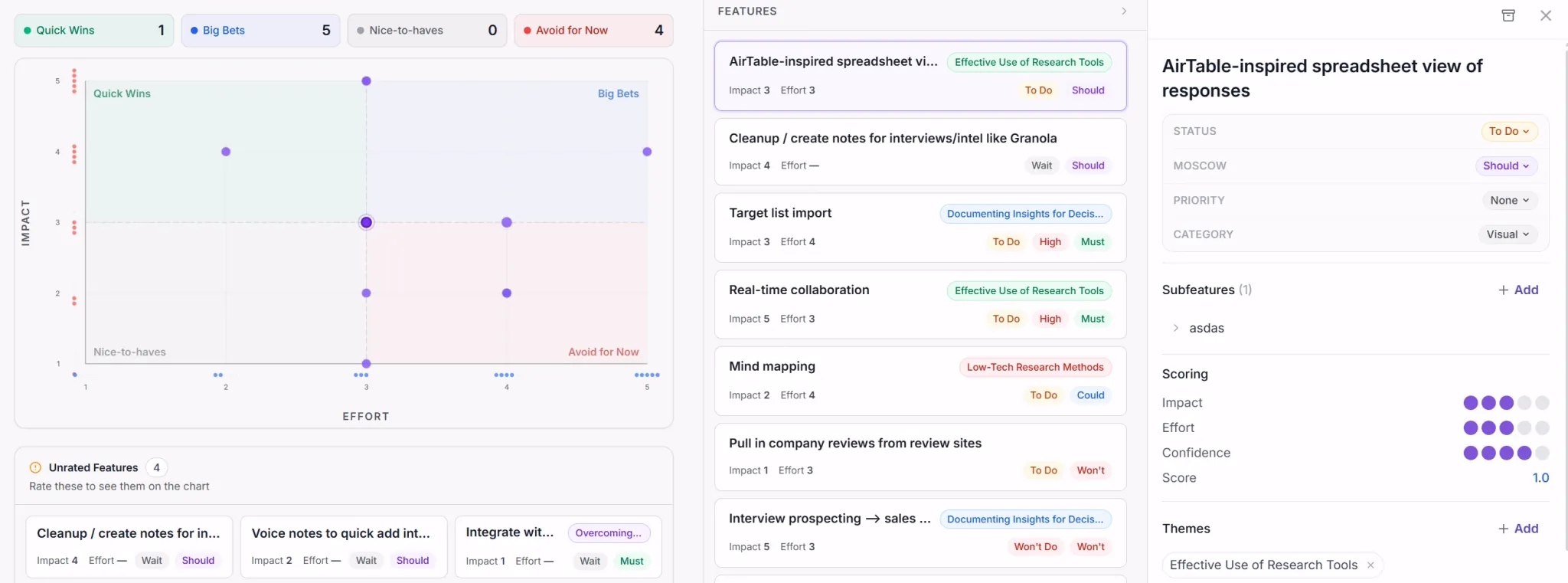
End-of-week deliverables should include:
- repeating takeaways indicating emerging "truths"
- a concise opportunities list
- one or two near-term tests
This framework builds genuine momentum.
Where Intervool fits
Intervool supports this workflow by enabling interview capture, quick takeaway documentation, opportunity transformation, and organized retention for future reference.
Ideas gain momentum through prioritization using impact versus effort metrics while maintaining a clear action list grounded in customer validation.
Early-stage teams access a 14-day free trial.