
In fast-moving product work, research data piles up fast — and gets lost just as fast. A UX research repository solves that: it centralizes user research so insight is organized, findable, and reusable. This guide covers what a repository is, its benefits, the features that matter, and how to choose one that actually gets used. But a repository only pays off if it stays alive: Nielsen Norman Group found 11% of research repositories are stagnant or forgotten — which is why how you pick and maintain one matters as much as having one.
What is a UX research repository?
A UX research repository is a centralized hub for all of a team's user research data — interviews, transcripts, usability tests, surveys, and notes — organized so it's easy to find and reuse. A good one stores qualitative and quantitative findings, supports tagging and search, and (increasingly) connects insight to the decisions it should inform. Done well, it's not just storage; it's an active part of the research and design process. (See our UX research repository software for how Intervool approaches it.)
Why centralize user research data?
Scattering research across Zoom, Notion, and slide decks creates duplicate work, conflicting versions, and forgotten studies. Centralizing it:
- Improves accessibility — everyone works from the same insights.
- Keeps things consistent — no stale or contradictory findings.
- Enables collaboration — shared understanding across product, design, and GTM.
- Tracks evolution over time — see how user needs shift, which informs forecasting.
Key benefits of a UX research repository
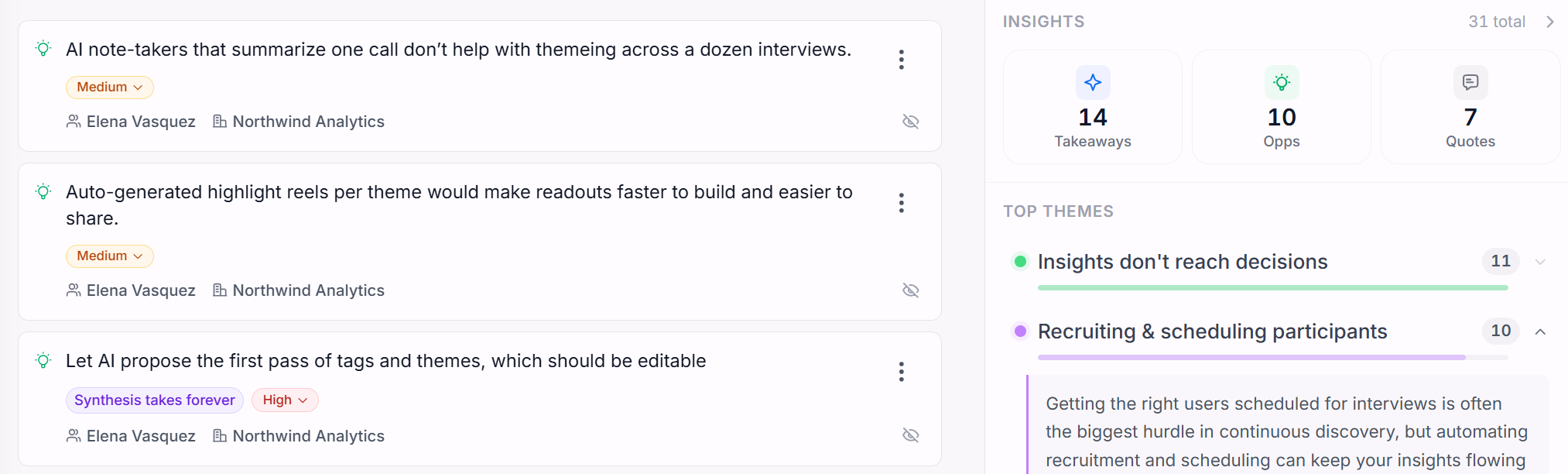
- A single source of truth. One searchable home means less time hunting, more time analyzing.
- Better, data-driven decisions. Comprehensive insight on hand reduces risky, gut-feel calls.
- Reused research. Reference past studies instead of redoing them — saving real time and budget.
- Trend tracking. Historical data reveals shifts in user behavior to inform future work.
- Lower cognitive load. Structured, organized data makes complex analysis simpler.
- Higher-quality UX. Decisions grounded in solid research produce better products.
How a repository improves collaboration
A repository turns research from a solo activity into a team asset. When findings live in one place — with tagging, comments, and search — designers, PMs, and engineers can all pull from the same insight, shortening cycles and breaking down silos. Non-researchers can contribute and self-serve, which fosters a shared sense of ownership over the user experience.
Features to look for
- Intuitive interface — low learning curve drives adoption (a repository nobody uses is worthless).
- Strong search and filtering — fast retrieval prevents duplicate research.
- Evidence linking — every insight traceable to its source quote, so findings stay trustworthy.
- AI synthesis — auto-extraction and theme clustering across studies.
- Integrations — clean import/export with your stack.
- Security — encryption, access control, and workspace isolation for sensitive data.
UX research repository examples
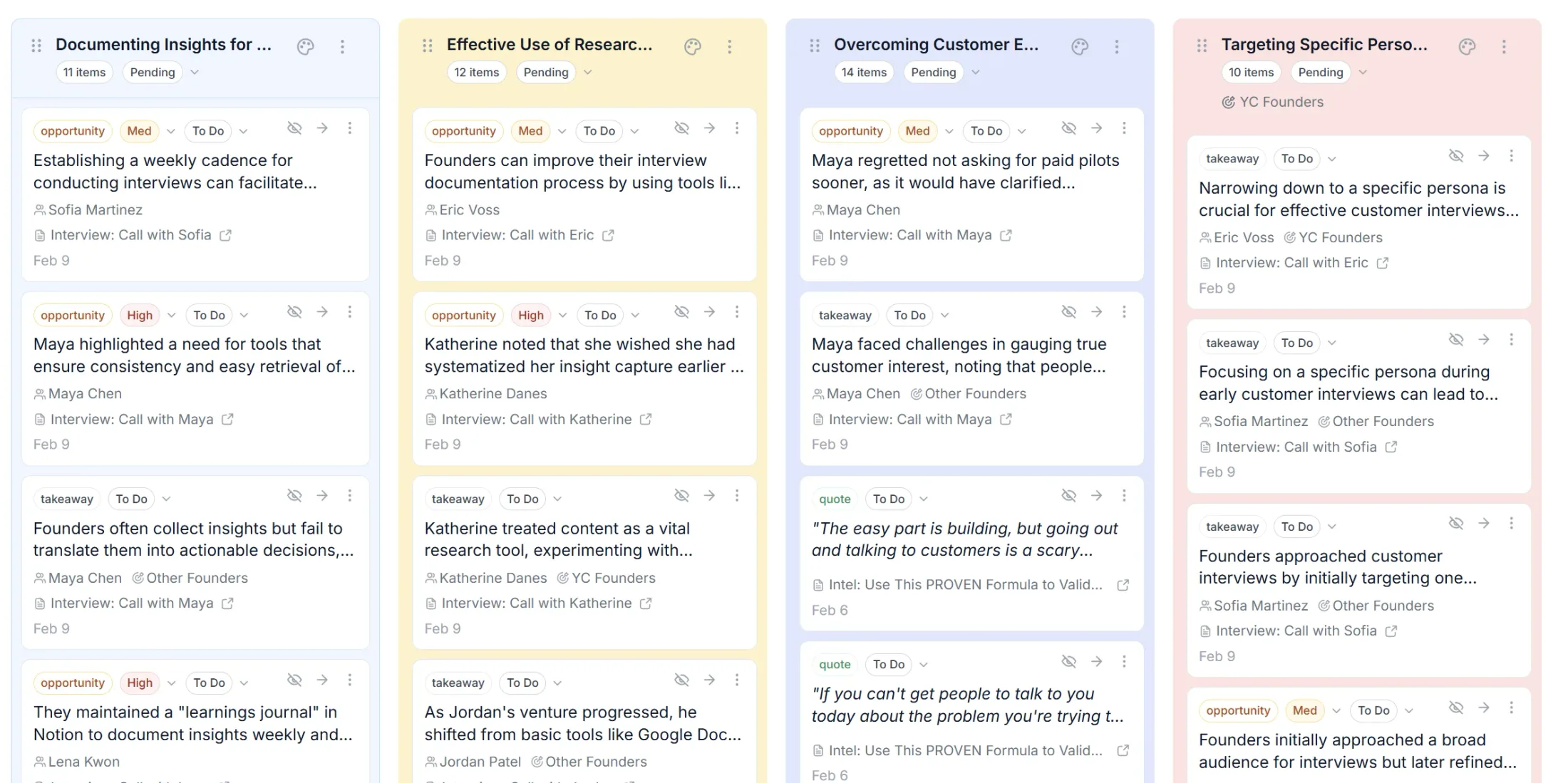
Popular repository and synthesis tools include Dovetail (rich tagging and highlighting), Condens (clean documentation and sharing), Marvin (AI synthesis), and EnjoyHQ. Intervool takes a connected angle: it's a repository and the synthesis layer — capturing and transcribing interviews, extracting evidence-linked insights, and carrying them into a prioritized roadmap, so the repository drives decisions instead of becoming an archive. (Compare Intervool vs Dovetail, Condens, and Marvin.)
Best practices for maintaining a repository
- Clean regularly — remove duplicates, update stale entries, tag new insights promptly.
- Standardize — clear conventions for tags and structure keep it consistent.
- Train the team — make sure everyone can find and contribute insight.
- Keep communication open — share findings to build a culture of evidence.
The repository that drives decisions
The biggest risk with a research repository is that it becomes a graveyard — tidy, complete, and ignored. The fix is connecting it to the work: keep every insight linked to its source, surface what repeats, and route it to the roadmap. That's exactly how Intervool is built. See how it works or start a free trial.